

We are living in a lonely age.
People have more ways to communicate than ever before, yet many feel unseen, unknown, and quietly disconnected. A person can sit in a crowded room, scroll through hundreds of online posts, attend a weekly worship service, and still carry the ache of isolation. Loneliness is not always the absence of people. Often, it is the absence of being truly known.

The Bible’s answer to loneliness begins with God Himself. Human beings were created for communion—with God first and then with one another. Though sin brought separation, the Gospel answers loneliness by bringing sinners near to God through Jesus Christ and into the life of His blood-bought people, the Church.
This should matter deeply to every follower of Jesus Christ.
Not because loneliness is a fashionable topic. Not because churches need another program. Not because pastors need one more burden added to already full plates. It should matter because the Word of God tells us that we were made to live before the face of God and in meaningful relationship with others.
From the beginning, the Lord declared, “It is not good for the man to be alone” (Genesis 2:18). That statement was not merely about marriage. It revealed something foundational about our humanity.
But sin shattered that fellowship. In the Garden, rebellion brought separation—man hiding from God, husband blaming wife, brother rising against brother. Loneliness is not merely a social inconvenience. It is one of the bitter fruits of a fallen world.
And that is why the Church must not answer loneliness with shallow friendliness, empty sentiment, or man-centered solutions. The Church must answer loneliness with the Truth of the Gospel.
The Church is called to something far richer than a sign at the entrance saying, “We’re Glad You’re Here.” A quick handshake, a name tag, and a cup of coffee may be helpful, but they are not enough. The Church of Jesus Christ is called to help people know they are loved by God, seen by the body of Christ, and invited into covenant relationships that do not disappear when the service ends.
More Than Sunday Attendance
For many Christians, church has become something we attend rather than a family to whom we belong. We come, we sing, we listen, we leave.
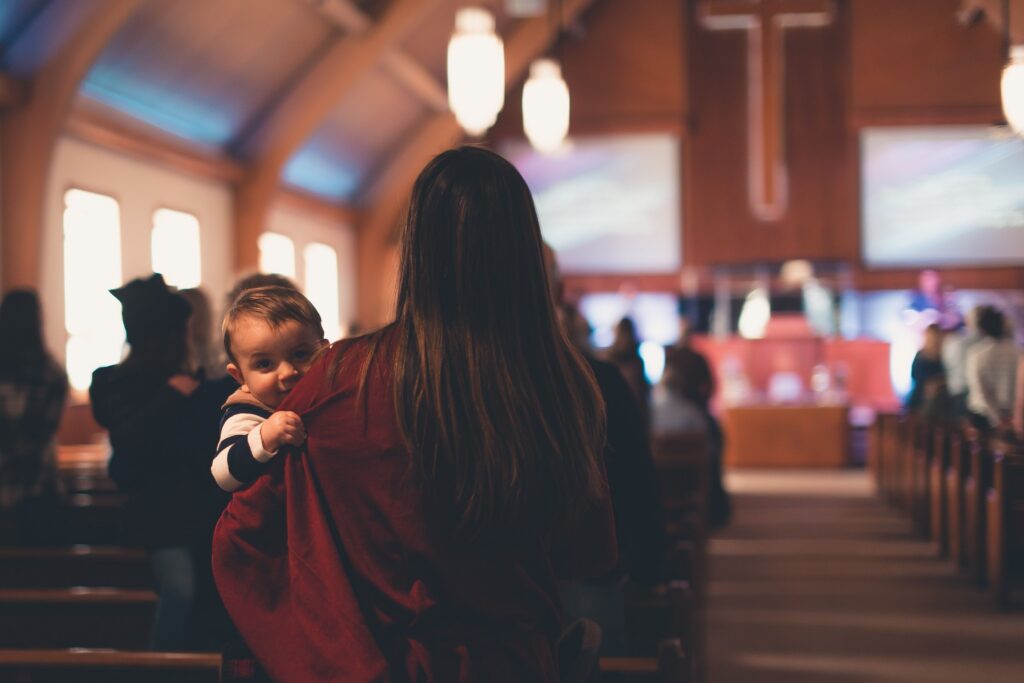
We may appreciate the preaching, enjoy the music, and agree with the doctrine, but still remain largely unknown to our fellow worshipers.
Friends, this is not the New Testament vision of the Church.
The Word of God never presents the Church as a spectator event. The Church is the body of Christ, the household of God, and the bride for whom Christ gave Himself. When the apostle Paul describes believers as members of one body, he does not imagine detached individuals occasionally occupying the same space. He envisions Spirit-filled interdependence: “If one part suffers, every part suffers with it; if one part is honored, every part rejoices with it” (1 Corinthians 12:26).
That is not casual association. That is covenant life.
A pastor once challenged his congregation with a simple but searching thought:
You never know who might have been blessed had you been here.
That statement reframes church attendance. It reminds us that our presence is not only about what we receive, but also about how God may use us to strengthen someone else.
Biblical belonging cannot be created by proximity alone. Sitting near someone in a building does not mean we are bearing one another’s burdens. Sharing a room is not the same as sharing life.
The lonely person in our churches may not need another event as much as another believer willing to notice their loneliness. The widow may need someone who remembers the anniversary of her loss. The single adult may need a family table where he or she is not treated as a temporary guest. The young parent may need someone to ask how things are really going. The teenager may need an older saint who knows their name and prays for their future. The newcomer may need more than, “Glad you’re here.” They may need, “Come, be with us.”
This is not optional kindness. This is obedience to Christ.
Loved by God
The Church’s response to loneliness must begin with God Himself.
Christian belonging is rooted first not in human warmth but in divine grace. Before we are welcomed by the Church, we are sought by the King. Before anyone else knows our name, the Good Shepherd calls His sheep by name. Before we ever take a seat at someone’s table, Christ invites us to His.
One of the most beautiful pictures of grace and belonging in Scripture is David’s kindness to Mephibosheth in 2 Samuel 9. Mephibosheth was from the house of Saul, the king who had hunted David. He was disabled, vulnerable, and living far from the palace. He had every reason to expect judgment. Instead, David called him by name, calmed his fear, restored what had been lost, and gave him a permanent seat at the king’s table.
This is a glimpse of the Gospel!
In Christ, God does not merely tolerate sinners from a distance. He brings us near. He does not invite us as temporary visitors. He adopts us as sons and daughters. The Father’s love is not fragile, reluctant, or conditional. It is covenant love, purchased by the shed blood of Jesus Christ.
But Christian love is not sentimental universalism. It is not the false teaching that all people are right with God regardless of repentance and faith. The Gospel declares that sinful men and women are separated from a holy God and can be reconciled to Him only through the atoning death and bodily resurrection of Jesus Christ. There is no salvation apart from Him.
Jesus said, “I am the way and the Truth and the life. No one comes to the Father except through Me” (John 14:6).
That is why lonely Christians need more than encouragement. They need Truth. They need to hear again and again: You are not forgotten. You are not an inconvenience. You are not invisible to God. Your name is known in heaven. Your tears are not wasted. Your sighs are not ignored. The God who sees the sparrow sees you (Matthew 10:29).
But the Church must not only preach this Truth. We must embody it.
Seen and Known by the Body of Christ
To be loved by God is the foundation. To be seen and known by the body of Christ is one of the ways His love becomes visible.
The Church cannot replace Christ, and community cannot do what only the Holy Spirit can do. But when Christ is at the center, the body of Christ becomes one of the ways His love is made visible to the lonely, the weary, and the forgotten.
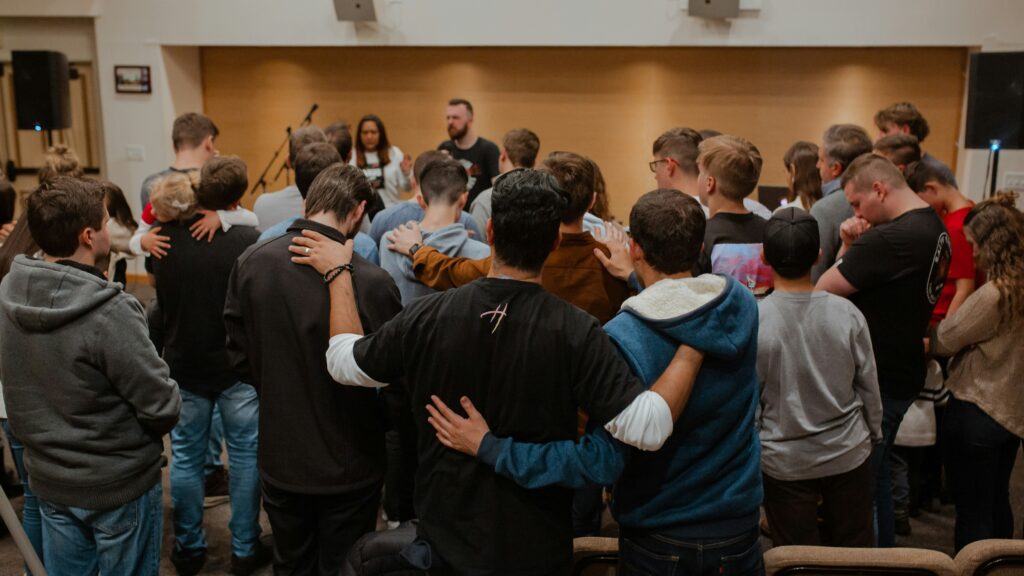
This is where churches have an extraordinary opportunity in this confused and fractured generation. In a culture of transaction, the Church can practice covenant. In a culture of performance, the Church can offer grace and Truth. In a culture of curated images, the Church can make room for confession, repentance, prayer, restoration, and patient love.
But this requires a shift.
We must move from consumer Christianity to committed membership in the family of God. We must stop asking only, “Did church meet my needs today?” and begin asking, “Whose burdens did I help carry? Who needed encouragement? Who was missing? Who is drifting? Who is sitting alone? Who is serving faithfully but quietly running dry?”
Belonging is not built by programs alone. Programs may create opportunities, but people create care. A small group can still be superficial. A busy church calendar can still leave people lonely. A full sanctuary can still contain isolated souls.
The question is not simply, “Do we have ministries?” The question is, “Are we becoming a people who notice in the name of Jesus?”
Jesus noticed Zacchaeus in a tree. He noticed the woman who touched the hem of His garment. He noticed the sick, the grieving, the ashamed, the overlooked, and the spiritually hungry. To follow Him is to become the kind of people who notice others in His name.
Relationships That Endure
Sunday-morning social time is a good beginning, but it is not the fullness of Christian fellowship. Biblical belonging requires relationships that endure beyond convenience.
Jonathan’s friendship with David, found in 1 Samuel chapters 18 through 20, offers a powerful example. Jonathan did not love David because the relationship advanced his own interests. In fact, loving David cost him. He surrendered status, privilege, and personal ambition because he recognized the hand of God on David’s life. His friendship was marked by humility, loyalty, and sacrifice.

That is the kind of friendship our lonely age needs: not relationships built merely on shared hobbies, social media, similar life stages, or personal benefit, but relationships shaped by Christlike love. The Church should be the place where young and old know one another, where married couples and singles share life, where immigrants and longtime members become family, where the grieving are not rushed, where the struggling are not shamed, and where the spiritually weary are gently restored.
This does not mean every member will know everyone deeply. That is not realistic. But it does mean every member should be meaningfully known by someone. No believer should be able to vanish from the life of the local church without being missed.
Church is more than a crowd of individuals who gather for an hour and then return to isolated lives. It is a community of those bought by the blood of Jesus Christ, united for mutual encouragement, mutual accountability, mutual prayer, and Gospel witness.
A Call to Recover Biblical Belonging
The loneliness crisis is not merely a problem “out there.” It is a summons for the Church to become more fully what Christ has already made us to be.
Pastors, preach the love of God with warmth, conviction, and Biblical clarity. Do not give people sentiment without salvation or community without Christ. Remind them that Jesus Christ is not ashamed to call His people brothers and sisters, and call them to live as members of His blood-bought family.
Small-group leaders, resist the temptation to rush through content while ignoring the condition of souls. Leave room for prayer, confession, repentance, encouragement, and follow-up.
Older believers, look for younger believers who need encouragement. Your presence, wisdom, and faithfulness may be a lifeline.
Families, open your lives to others. Hospitality does not require a perfect home, only a willing heart surrendered to Christ.
Church members, learn names. Notice absences. Send the text. Make the call. Invite someone to lunch. Pray with the person who looks fine but may be barely holding on.
And to the lonely Christian: do not believe the lie that your loneliness makes you a failure. Even David knew the isolation of the cave. Even faithful believers walk through seasons when they feel forgotten. Cry out to the Lord. Ask Him for courage. Take one step toward His people. Let someone know you need prayer. Let yourself be known.
But also remember this: no human friendship, no church community, and no earthly table can satisfy the deepest longing of the soul apart from Jesus Christ. You were made for God. You were made to know Him, worship Him, obey Him, and belong to Him forever.
A Witness to the Lonely World
Christ has not called His Church to be a crowd of individual worshipers. He has called us to be a family, a body, a bride, a household of faith.
And in a lonely age, that kind of Biblical belonging becomes a radiant witness to those outside the faith.
The world does not need a Church that is merely busy. It does not need a Church that imitates the culture’s shallow definitions of acceptance. It does not need a Church that exchanges Truth for approval or replaces the Gospel with vague spirituality.
The world needs a Church submitted to the authority of God’s Word, alive with the love of Christ, filled with the Holy Spirit, and urgent in calling sinners to repentance and faith.
So let us recover the beauty of Biblical belonging. Let us be a people who proclaim with our words and our lives: You are loved by God. You are seen by the body of Christ. Come to Christ. Come to His people. There is grace for sinners, hope for the weary, and a place at the table for all who belong to Him.
Because in the end, the Church’s answer to loneliness is not merely friendship.
It is Christ Himself.
Listen To The Cure for Loneliness Series
Share
Recent MY Journal

Uncovering the Islamist Strategy for Domination
October 11, 2026

First Large-Scale Navigator Shipment Reaches the Middle East
October 9, 2026
Sign Up for Ministry Updates